
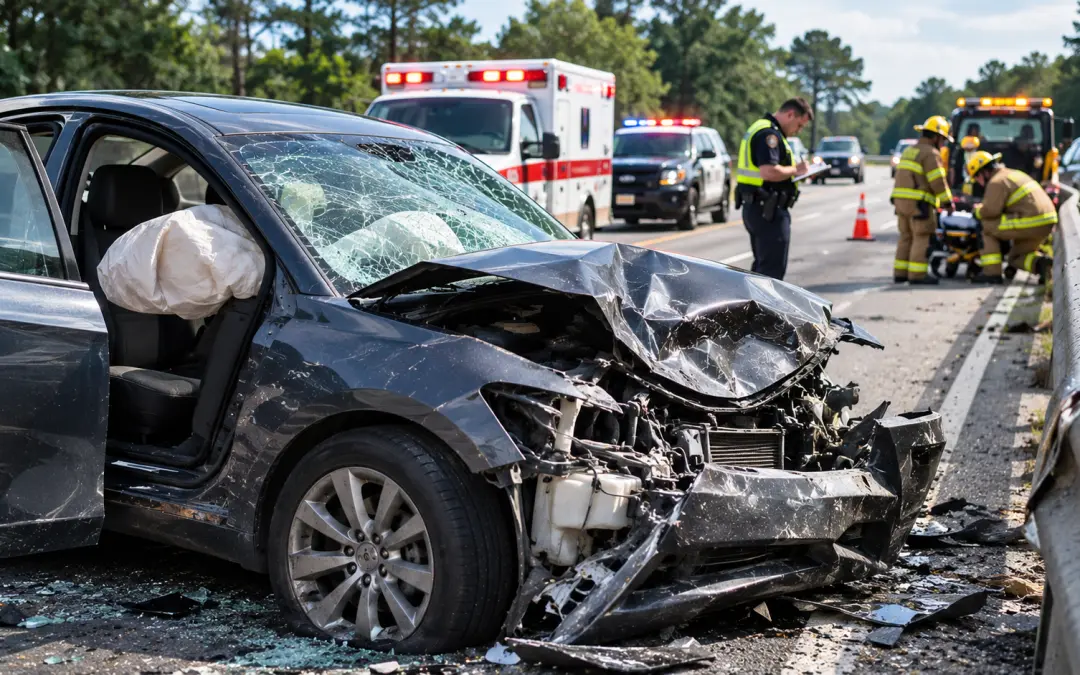
The wreck took a few seconds. Getting your car back can take much longer, and every day it sits on a storage lot, the bill grows. After a car wreck in Tyler, TX, many drivers leave the scene in a friend’s car or an ambulance, then realize the next morning they do not know where their vehicle went, who towed it, or what it will cost to get it out.
Those questions matter. Storage charges usually accrue daily, insurance companies may push back on charges they consider unreasonable, and personal items like medications, child seats, or work tools may be locked inside. This guide explains where towed cars typically end up, how Texas regulates storage fees, the fastest path to a release, and who should ultimately pay.
Where Does Your Car Go After a Wreck in Tyler?
Short answer: If your car could not be driven and you did not arrange your own tow, it was most likely taken to a licensed vehicle storage facility (often called a storage lot or impound lot) by a tow company called to the scene by law enforcement.
Tows after a crash generally fall into two groups:
- Consent tows. You or your insurer chose the tow company and destination, such as a body shop.
- Nonconsent tows. Officers called a tow, often from a rotation list, because the car was disabled, blocking traffic, or the driver went to the hospital.
How to find your car
Start with the law enforcement agency that worked the crash. Inside city limits that is usually the Tyler Police Department; on highways and county roads outside the city it may be the Smith County Sheriff’s Office or the Texas Department of Public Safety. Have the date, location, and any case or report number handy. The agency can typically tell you which wrecker took the vehicle and where it is stored.
Any tow ticket from the scene should list the company and storage address. Texas requires storage facilities to notify registered owners, but do not wait for that letter; days of fees can pass first.
What Can a Texas Storage Lot Charge?
Short answer: Texas does not let storage lots charge whatever they want. Vehicle storage facilities and tow operators are licensed by the Texas Department of Licensing and Regulation (TDLR), and state law and TDLR rules limit the types and amounts of fees they can collect.
A typical bill after a nonconsent tow may include:
| Charge | What it covers |
|---|---|
| Towing fee | Hooking up and hauling the vehicle from the crash scene |
| Impoundment fee | Taking the vehicle into the storage facility |
| Daily storage fee | Each day (or part of a day, as rules allow) the car stays on the lot |
| Notification fee | Mailing or publishing required notice to the owner and lienholder |
| Other permitted charges | Items such as a preservation fee or extra labor, only where the rules allow them |
The exact maximums are set by statute and TDLR rule and may be adjusted over time, so check TDLR’s current vehicle storage facility page or ask the lot for its posted rate sheet. Tow charges for police-ordered tows may also be governed by local rules.
Why speed matters
Storage is the one cost that grows simply because time passes. A car left for two weeks while you recover or wait on an adjuster can build a bill that rivals a repair estimate. Ask for an itemized invoice before you pay, and move the car once your insurer inspects it, even if fault is still disputed.
How to Get Your Car Back Fast: A Step-by-Step Checklist
- Confirm the location and hours. Call the storage facility, confirm it has your vehicle, and ask about release hours, total charges so far, and accepted payment methods.
- Check for a police hold. If the car is evidence in an investigation, as can happen in a serious or fatal crash or a DWI arrest, the lot may not release it until the agency clears it. Ask the agency whether a release form is needed.
- Bring identification and proof of ownership. Expect to show a photo ID plus the title or registration; some lots also ask for proof of insurance. A lienholder may need to be involved if the car is financed or leased.
- Send someone else if needed. If you are hurt, ask the lot what written authorization lets a family member or your insurer pick it up on your behalf.
- Call your insurer the same day. Your adjuster may arrange to move the car to a body shop or an insurance yard, which can stop storage fees at the current lot.
- Inspect and photograph before leaving. Note any new damage or missing items and raise it with the facility in writing before you drive or tow away.
Getting personal items out
If you only need medication, a wallet, a car seat, or work equipment, ask the facility whether you can retrieve personal property before the vehicle itself is released. Bring ID and be ready to show you own or are entitled to the items.
Who Pays for Towing and Storage After a Tyler Car Wreck?
Short answer: If another driver caused the crash, reasonable towing and storage charges are generally part of your property damage claim against that driver’s liability insurance. In the short term, though, the lot wants payment from whoever picks up the car.
Texas is an at-fault state. The driver who caused the wreck, through their liability insurer, is generally responsible for the damage, and Texas requires minimum liability coverage of $30,000 per injured person, $60,000 per crash for injuries, and $25,000 for property damage. Your options usually look like this:
- The at-fault driver’s insurer may pay the lot directly or reimburse you once it accepts liability.
- Your own collision coverage can move faster, paying for towing, storage, and repairs, then seeking repayment from the other insurer. You may owe your deductible up front.
- Paying out of pocket gets the car released now. Keep every receipt and the itemized invoice so you can claim reimbursement.
Do not let storage fees weaken your claim
Insurers may argue they should not pay for storage days that could have been avoided. Acting promptly, notifying the insurer, and documenting any delay helps keep those charges recoverable.
For a broader look at the claim process, see this beginner’s guide to car wreck injury claims.
What If You Think the Lot Overcharged You?
Short answer: Pay what is needed to get your car out, keep the receipt, then dispute the charges. Leaving the vehicle on the lot while you argue only adds fees. Request a written, itemized invoice and the lot’s posted rate schedule, share both with your adjuster, and file a complaint with TDLR if you believe a licensed tow company or storage facility charged unauthorized fees.
When to talk with a lawyer
Towing and storage are usually the smallest piece of a wreck claim, but they often signal bigger issues. Consider talking with an attorney if you were injured, the insurer is denying fault or refusing to pay storage, or your car was totaled and the offer seems low. Gibbins Law represents people hurt in a car wreck in Tyler, TX and handles other personal injury cases, including trucking and wrongful death claims.
Most Texas injury and property damage claims have a two-year deadline to file a lawsuit, so it is wise to get advice well before that window closes.
Frequently Asked Questions
Do storage fees keep running if my insurance claim is still open?
Usually, yes. The lot charges daily until the vehicle leaves, regardless of whether fault has been decided. Ask your insurer to move the car to a body shop or insurance yard, or pick it up yourself, to limit charges.
Can someone else pick up my car if I am in the hospital?
Often, yes, with written authorization and the right documents. Call the facility to ask exactly what it requires, such as a signed letter, a copy of your ID, and proof of ownership.
Can a storage lot refuse to release my car?
A lot may hold a vehicle until required fees are paid and ownership is shown, or until a law enforcement hold is lifted. If you believe a facility is refusing release improperly, you can file a complaint with TDLR.
Get Your Car Back, Then Protect Your Claim
A tow after a wreck turns into a second problem fast. Find out where your car went, confirm whether a police hold applies, gather your ID and ownership papers, and get your insurer involved the same day. Texas regulates what licensed storage facilities can charge, so ask for an itemized bill, keep every receipt, and dispute questionable fees after the car is safely out.