
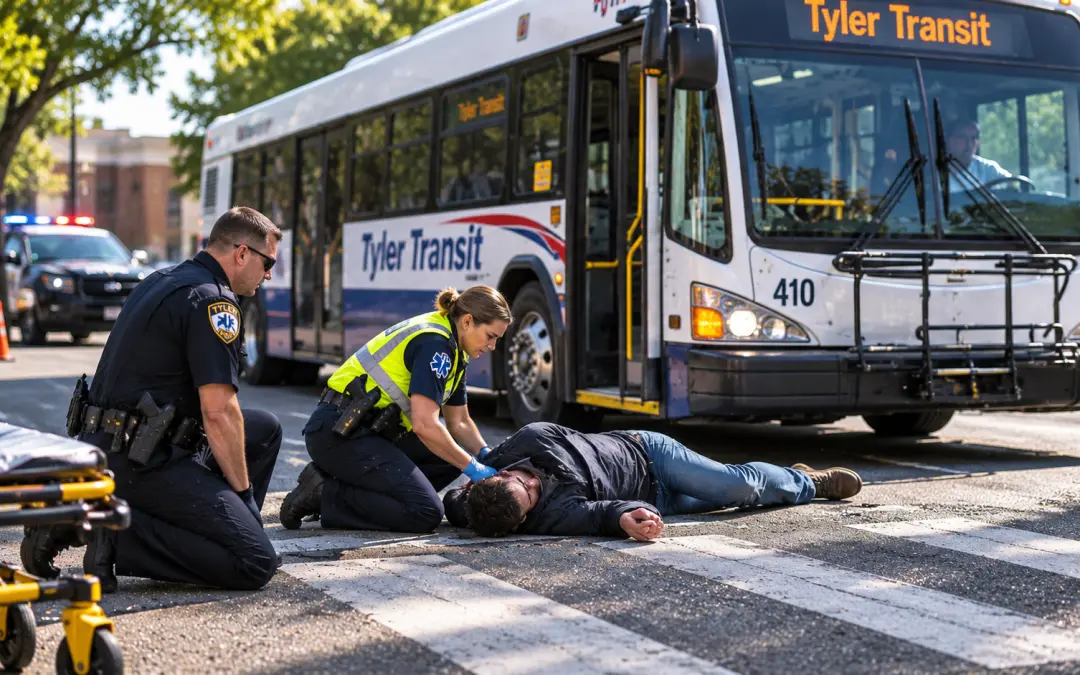
A crash with a city garbage truck, a police cruiser, or a Tyler Transit bus can feel like any other wreck until you try to file a claim. When the other driver works for a government, Texas law changes the rules. There are limits on what you can recover, exceptions that can block a claim, and a written notice deadline that can end your case before it starts if you miss it.
That deadline is often months, not years, and it may be shorter than the state’s default. Many people learn about it only after it has passed. Whether you handle the claim yourself or work with a civil attorney in Tyler, TX, knowing these rules early protects your options. Here is how claims against a city work, what the notice must say, and what to do now.
Can You Sue the City of Tyler After a Car Wreck?
Short answer: Often, yes. Cities in Texas generally have governmental immunity, but the Texas Tort Claims Act waives that immunity for certain injuries and property damage caused by a government employee’s negligent operation of a motor vehicle while on the job.
The Tort Claims Act (Chapter 101 of the Texas Civil Practice and Remedies Code) is the main law here. For a vehicle claim to fit within its waiver, the basics usually include:
- A government employee was driving. The vehicle was operated by a city employee, not an independent contractor.
- The employee was acting within the scope of employment. A worker on a route usually qualifies; one on a personal errand may not.
- The employee would be personally liable under Texas law. In plain terms, the driver was negligent.
This can cover crashes involving city fleet vehicles such as utility trucks, sanitation trucks, code enforcement cars, and police or fire vehicles, as well as a city-operated bus system. If the vehicle belonged to a different public entity, such as Smith County, a school district, or a state agency, the same Act usually applies, but notice rules and recovery limits can differ, so identify who owned the vehicle and employed the driver first. The crash report, the vehicle’s markings, and the agency’s name on any paperwork help.
What Is the Notice Deadline for a Claim Against a Texas City?
Short answer: Under the Texas Tort Claims Act, a governmental unit is entitled to written notice of a claim within six months after the incident. A city’s charter or ordinances can set a shorter deadline, and Texas law honors those local deadlines. If you were hit by a City of Tyler vehicle or bus, check the city’s own requirement right away rather than assuming you have six months.
Why this deadline is different from the lawsuit deadline
Notice is a separate, earlier step than the two-year lawsuit deadline, and missing it can bar the claim even when the lawsuit deadline is far off.
| Step | Typical timing | Source |
|---|---|---|
| Notice of claim to the city | Within six months under state law, or a shorter period if the city charter sets one | Tort Claims Act, §101.101; city charter |
| Lawsuit filed | Generally within two years of the crash | Tex. Civ. Prac. & Rem. Code §16.003 |
What about “actual notice”?
The formal notice requirement may not apply if the city had actual notice of the claim, meaning it knew of the death, injury, or property damage and was subjectively aware that its own fault may have contributed. A police report alone does not always meet that standard, and courts look closely at what the city knew. Relying on actual notice is risky; sending a written notice on time is the safer path.
What Should a Notice of Claim Include?
Short answer: State law requires the notice to reasonably describe the injury or damage claimed, the time and place of the incident, and the incident itself. A city charter may add requirements, such as where to send it, whether it must be sworn, or other details.
A practical notice usually covers:
- Your name, address, and contact information
- The date, time, and exact location of the crash (for example, the intersection or block number)
- The city vehicle or bus involved, including any unit or route number you noted
- A short, factual description of what happened
- Your injuries, treatment so far, and vehicle damage
- The police report number, if you have it
How to send it
Confirm with the city’s charter, ordinances, or legal office who must receive the notice, then send it by certified mail with return receipt and keep a copy. A phone call to a city office or an adjuster is not written notice, and notice sent to the wrong entity, such as the city when a county owned the vehicle, may not count.
How Much Can You Recover From a City?
Short answer: Less than you might from a private driver. The Tort Claims Act caps a city’s liability and does not allow punitive damages.
For a municipality like the City of Tyler, the Act generally limits damages to $250,000 per person and $500,000 per single occurrence for bodily injury or death, and $100,000 per occurrence for property damage. Other local entities, such as counties or school districts, generally have lower limits. Those caps apply to the government’s share, so other sources may matter too:
- Your own coverage. Uninsured/underinsured motorist coverage, personal injury protection (PIP), and collision coverage may help, depending on your policy.
- Other at-fault parties. If a second private driver contributed to the crash, that driver’s insurance may be part of the recovery.
Exceptions that can block a claim
Some situations fall outside the waiver. One that matters for city vehicles is the emergency response exception: if a police car, fire truck, or ambulance was responding to an emergency call and complied with the laws that apply to emergency action, the city may not be liable unless the driver acted with conscious indifference or reckless disregard for others’ safety. These are fact-heavy questions where dash-camera video, radio logs, and witness statements can matter a great deal.
What to Do After a Crash With a City Vehicle or Bus
- Get medical care and call police. A crash report creates an official record of the vehicle, the driver, and the agency involved.
- Write down identifying details. Note the vehicle number, bus route or number, the agency name on the door, and the driver’s name if possible.
- Gather evidence quickly. Photograph the scene, get witness and passenger contacts, and ask in writing that the city preserve video and records.
- Mark your notice deadline. Count from the crash date, confirm any shorter city deadline, and send written notice early.
- Be careful with recorded statements. If city claims staff calls, stick to facts and avoid guessing about fault.
- Keep records. Save medical bills, repair estimates, rental receipts, and records of missed work.
For general steps that apply to any wreck, including how insurance claims and Texas fault rules work, see this beginner’s guide to car wreck injury claims.
When to talk with a civil attorney
Claims against a government move on a shorter clock and stricter rules than an ordinary crash. Talk with a lawyer soon if you were injured, if the vehicle may have been on an emergency call, if you are unsure which agency owned it, or if the notice deadline is approaching. Gibbins Law handles car wreck claims in Tyler and other personal injury matters, including trucking and wrongful death cases.
Frequently Asked Questions
How long do I have to notify the City of Tyler after a crash?
State law allows up to six months for written notice, but a city charter can set a shorter period, and Texas law enforces it. Check the City of Tyler’s current requirement immediately and send notice well before any deadline.
I was a passenger on a Tyler Transit bus. Do the same rules apply?
Generally, yes. If the bus is operated by the city, an injured passenger’s claim usually falls under the Texas Tort Claims Act, including its notice requirement and damage caps. Because passengers do not control the bus, fault questions usually center on the bus driver or other motorists.
Is a police report enough to count as notice?
Not necessarily. A report may show the city knew about the crash, but “actual notice” usually requires that the city knew it may have been at fault. Sending separate written notice is the safer choice.
Protect Your Claim Before the Clock Runs Out
A crash with a city vehicle or bus follows different rules than a typical wreck. The Texas Tort Claims Act can open the door to a claim, but it also caps damages, carves out exceptions for emergency responses, and requires written notice on a timeline that a city charter may shorten. Identify the agency involved, confirm its notice deadline, and send a clear, documented notice as soon as you can.